The Modular Revolution: Why Your Next Bakery Should Be a “Box”
There is a bit of a stigma when it comes to modular houses. People often confuse them with outdated mobile homes or think they’re somehow “substandard” compared to traditional builds. But let’s clear that up first: Modular housing refers to high-quality structures built in sections in a factory setting, which are then transported and assembled on-site. Unlike mobile homes, they sit on permanent foundations and have to meet the same (or even stricter) building codes as any other house. They are essentially a “Lego-style” approach to high-end construction.
Despite the stigma, I believe modular houses are actually the perfect storefront for a small kitchen or a boutique bakery. Think of it as a “Lite” version of a traditional brick-and-mortar restaurant. You can give your customers that premium dine-in experience without the massive, soul-crushing budget usually required to open a full-scale restaurant.
The best part? You get to be the architect of your own vibe. You can go with a soft, cozy aesthetic—think a quaint little café with a chimney that breathes a sense of “home”—or you can lean into a sleek, modern look with clean glass and a cohesive, minimalist design.
Design Without the Debt
While these units are significantly less expensive than traditional construction, you aren’t limited in your creativity. Going back to that chimney idea—I love it because it’s a universal symbol for “comfort.” Whether you’re running a soul food kitchen, a brunch spot, or a breakfast bakery, that chimney tells the customer your food is made with heart.
Now, if you’re aiming for a higher-end, luxury feel, you can pivot to sleek windows and minimalist, modern color palettes. Imagine a sushi spot or a high-end Italian bakery where the design is as crisp as the service. One of the coolest options you have is the “Transparent Kitchen.” Like a hibachi restaurant, you can design your modular space so customers can look in and see the entire process. There is something so satisfying about watching your food being prepared; it turns a simple meal into an event. You aren’t boxed in just because you’re in a modular house. You’re in control of the narrative, letting your customers know exactly what to expect just by looking at the building.
The Great Debate: Modular Kitchen vs. Food Truck
After seeing the benefits of going modular, you might be wondering: “Why wouldn’t I just get a food truck?” It’s a fair question. Food trucks have lower price points, flexible locations, and you can chase the crowd at festivals.
But in my opinion, a modular house is the best of both worlds. You get the customization and space of a traditional restaurant, allowing you to fit more equipment and offer a real “sit-down” atmosphere, but you keep the flexibility of a truck. If you realize after six months that your demographic isn’t in one specific area, you can move. It’s not as simple as putting a truck in drive—you’ll need a flatbed and some logistics—but you aren’t stuck in a 10-year lease.
There’s also the “Trust Factor.” Let’s be real: not everyone trusts a food truck. Think about a busy parent out with their kids. They’re tired, they’re looking for a reliable spot to eat, and they want to know the kitchen is held to a high standard. A parent is almost always going to feel more comfortable walking into a modular house because it feels settled. It feels like a place that is maintained and permanent, whereas a truck feels like it might be gone tomorrow.
The “Ichiraku” Experience
For those of you who want to create a truly intimate connection with your customers, I have an idea: The Bar-Style Modular Kitchen. If you’ve ever watched Naruto, you know Ichiraku Ramen. It’s small, it’s tucked away, but it’s a sanctuary.
For this concept, you could have a small indoor bar or even a covered outdoor seating area where the baker and the customer can actually talk while the work is happening. I would design the layout to look something like this:
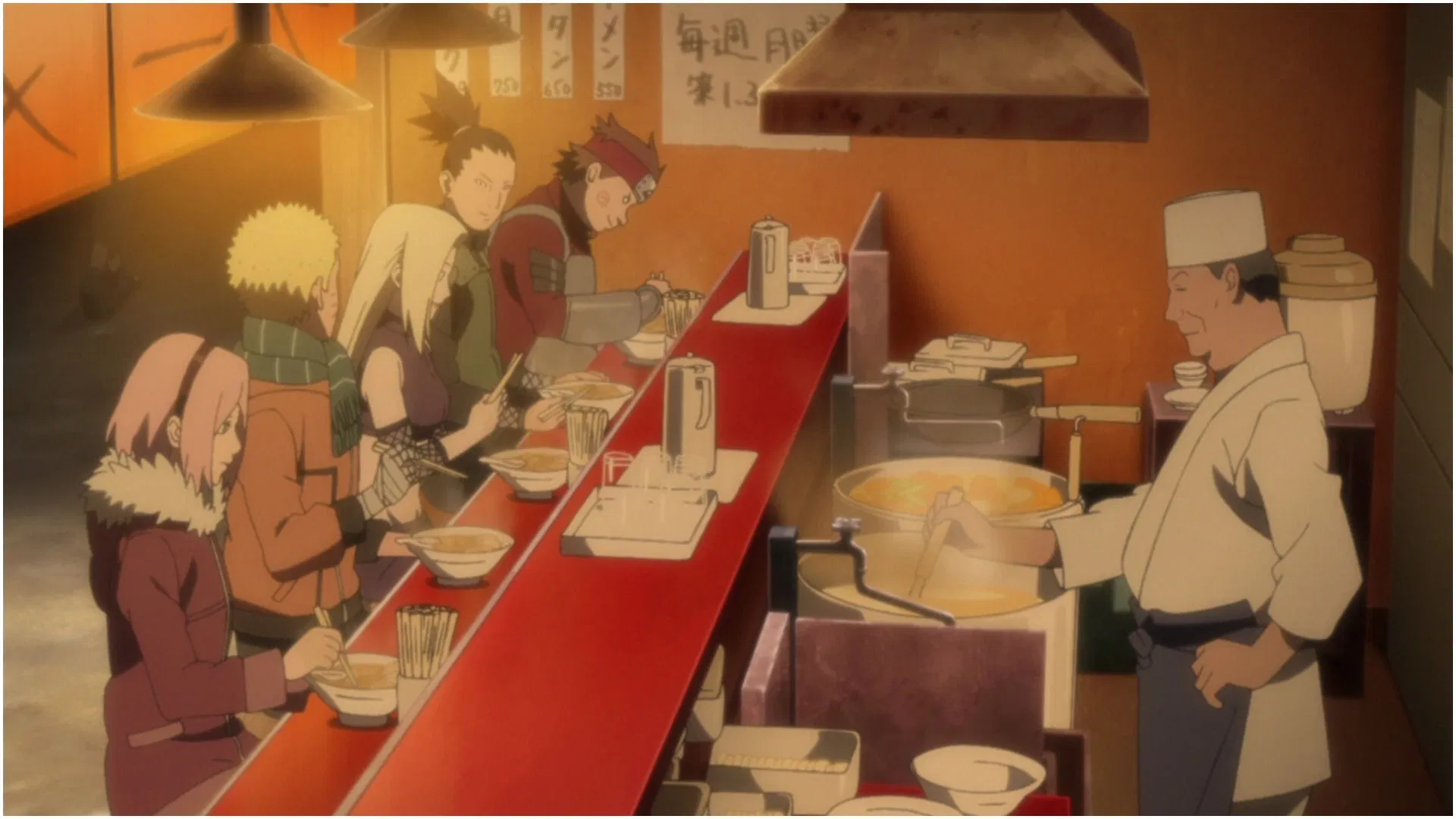
I’d want the seating to be positioned so the customer is near eye-level with the chef. You don’t want them sitting so low that they’re staring up at you awkwardly, but just high enough to see the flour flying and the steam rising. That eye-level connection turns a “transaction” into a “friendship.”
Luxury is a Mindset, Not a Zip Code
One last thing I want to hit on is that “Cheap” and “Luxury” can exist in the same space. Just because your modular kitchen costs less than a brick-and-mortar building doesn’t mean you can’t achieve a high-end feel.
Luxury is in the details. It’s in your chefs wearing a cohesive, branded uniform. It’s in the waiter holding a towel over their arm or the way the silverware is perfectly aligned on the table. It’s in the transparency—allowing customers to see the kitchen builds a layer of trust that you just can’t buy.
To tie it all together, you have your menu and your design. From the way the lobster on your menu is plated to the specific color of the chairs and the finish on your doors, you have the power to create the look you truly want. And remember, you don’t have to have it all on Day One. If you can’t afford the designer chairs yet, that’s fine. Your business is allowed to grow with you. That growth actually becomes part of your brand story; your loyal customers will love seeing the “upgrades” every time they visit.
Final Thoughts
I really enjoyed writing this, and I hope it sparked something for you. Modular houses are an incredible asset for any chef who wants to own their own space but doesn’t have “old money” to throw at a building.
If you don’t care about design and just want to serve food on the go, a food truck is a great start. But if you want to build a destination, modular is the way to go. Maybe your journey even looks like a progression: start with a truck, move into a modular house, and eventually build your brick-and-mortar empire.
I wanted to share this because modular kitchens aren’t “popular” yet, but with the way the economy is going and the cost of everything rising, I think we’re going to see a huge shift toward this style of entrepreneurship. There is always a way to follow your dream, even if the path isn’t the “straight and narrow” one everyone expects.